
2026 CONTRIBUTORS
TO THIS ONLINE MUSEUM
Students put a tremendous amount of work and research into this exhibit. All topics were gathered in the context of the course, Monstrous Medicine: Medical Experimentation in U.S. Historical Contexts.

ARIN CLEARY
Don Francis
Major: Medical Humanities
Class of 2026
Contributed: Hormones and Harm: The Overlooked Link Between Depo-Provera and Brain Tumors and Bodies Taken, Futures Denied: The Forced Sterilization of Native American Women in IHS Hospitals (1960–1976).
Edited: Placebo Surgery for Angina Pectoris and Metrazol Shock Therapy in Georgia State University
This history is important, in my opinion, because it shows how healthcare may fail some people by denying them bodily autonomy and informed consent, especially women and oppressed groups. It highlights the need of ethics, transparency, and patient rights while also showing how past injustices still have an impact on the public's trust in healthcare
After Graduating UTSA, I plan on attending the UT Health, Respiratory Health program and become a Registered Respiratory Therapist.

ISAAC GUTIERREZ-LOPEZ
Don Francis
Majors: History/Political Science
Class of 2027
Contributed: The Ethics of the Kennedy Krieger Lead Removal Study, Surgical Castration in the American Pork Industry
History is critical for looking at current socioeconomic circumstances and deciding whether or not enough is being done to acknowledge hidden voices.
After graduation, I would like to pursure a career in higher education, with an interest in becoming a Museum Director.

SARAH HERNANDEZ
Don Francis
Major: Medical Humanities
Minor: Chemistry
Class of 2026
Contributed: Not Required: The Resort and Hydroxychloroquine COVID-19 Treatment, The Science Club
Edited: Twins Secretly Separated, Body Mass Index: When Race Determines Health
This history is important because it allows future healthcare providers like myself to look back at moments when patients' autonomy and trust were disregarded, and to sit with the discomfort of that truth rather than distance ourselves from it. As future providers, we inherit both the benefits and the moral weight of this history, and with that comes a responsibility to practice medicine in ways that center dignity, consent, and equity.
Career Plans: I plan to pursue a career as a Physician Assistant serving predominantly Hispanic communities in Family Medicine.

MIA KAEPP
Don Francis
Major: Anthropology & Criminal Justice
Minor: Foreign languages & East asian studies
Class of 2026
Contributed: Crying baby ≠ Pain, The House of Horrors
Edited: Silent: Secrecy of Live Tissue Training, The Science Club
This history is important because it helps us grow stronger; we can look back and build on what was previously learned. History can also help us find our own identity through passed-down stories.
I plan to pursue my love of anthropology and forensics by pursuing a doctoral degree to become a forensic anthropologist.

MYKAEL LOZANO
Don Francis
Major: Public Health
Class of 2026
Contributed: The PolyHeme Trials and the Ethics of Emergency Research, The 1908 Tuberculin Experiments at St. Vincent's Home for Orphans
I believe that understanding medical history is essential in shaping how we provide healthcare to the current population. It gives the framework for how healthcare practices, treatments, and ethical standards have evolved. By looking back at how patients were treated, both medically and ethically, we gain a deeper appreciation for the struggles many minority groups faced when navigating systems that did not always prioritize their well-being or voice. Understanding this history empowers patients to be more informed and engaged in their own care, while reminding healthcare providers that the person in front of them is always at the heart of medicine's true purpose.
I plan to pursue dentistry as my career, where I will open my own clinic that lets patients' voices be heard.
![[image: Mata, 2026. Mata looking forward]](https://static.wixstatic.com/media/f9985d_af0d87d3b8b94a23b9a444343ac1e8de~mv2.jpg/v1/crop/x_0,y_212,w_1036,h_764/fill/w_456,h_336,al_c,q_80,usm_0.66_1.00_0.01,enc_avif,quality_auto/%5Bimage_%20Mata%2C%202026_%20Mata%20looking%20forward%5D.jpg)
ELIANET MATA
Don Francis
Major: History
Class of 2027
Contributed: Antivenom: Saving Lives at a Cost, Smarter Scans, Bigger Questions
Edited: Black Women Exploited, Used as Incubators
I think learning about the history of unethical experimentation really matters because it directly shapes how we understand medicine today, both as patients and as healthcare providers. Looking at the past helps us recognize what unethical practices look like, so we can question them and prevent them from happening again. It’s not just about history, it’s about protecting people now and making sure medical care is built on trust, consent, and accountability.
I plan to become an archivist and help preserve records of the past, especially those that reveal difficult truths like unethical medical experimentation. By keeping these histories accessible, I can help ensure they aren’t forgotten and encourage accountability and more ethical practices in the future.

SEAN MCFALLS
Ashley Jones
Major: History
Class of: 2027
Contributed: “Silence: Secrecy of Live Tissue Training”and " The Science Club"
Editied: "Crying baby ≠ Pain" and "The House of Horrors"
The Medical field is something that we all have to interact with at some point in our lives. To that, the way doctors interact with patients in the commercial medical field today is informed by the past. In order to improve transparency, we must educate ourselves about medical history to know how biases are formed and present themselves in a modern medical setting.
I plan to get my teacher's certificate and become a history teacher for a public school district while pursuing my passion in music.

SEBASTIAN MORALES
Tess Brown
Name: Sebastian Morales
Major: Biology
Class of 2026
Contributed: “Incarcerated People” and “Brain Imaging Study”
Career Plans: I will attend medical school after I graduate from UTSA. I will be attending medical school to become a neurosurgeon. I will work in Texas once I finish medical school.
_edited.jpg)
ERIN ROGERS
Kevin Nye
Major: Medical Humanities
Class of 2026
Contributed: Metrazol Shock Therapy at Georgia State Asylum, Placebo Surgery for Chest Pain
Edited: Octipi on Ecstasy, Hormones and Harm
History is necessary because it helps us to understand how our world is shaped. By studying history, we can learn what failed and what helped society.
After college, I plan on pursuing a career in Medical Dosimetry to help cancer patients and design precise radiation treatments.
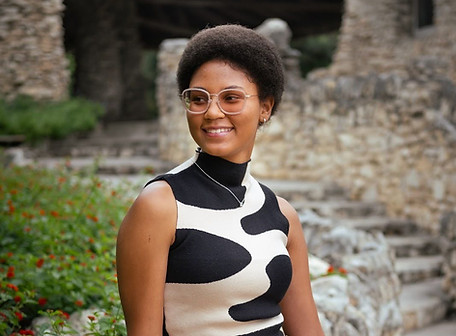
GISELLE SUTTON
Alex Young
Major: Psychology
Class of 2027
Contributed: Twins Secretly Separated, Body Mass Index: When Race Determines Health
Edited: The Fernald Science Club, Not Required: The Resort (Texas) Hydroxychloroquine Covid Treatment
This history is important because knowing where medical knowledge and practices originate from and who they have hurt can help create a path forward into better care. Knowledge is power, and that power, in my opinion, should be used to protect the vulnerable.
My future plan is to create a safe environment for people to heal mind, body, and soul.

LISA WEAVER
Debbie Green
Major: Women's Gender & Sexuality Studies
Minor: Psychology
Class of 2029
Contributed: Experimental Sexual Enhancement Surgery and Black Woman Exploited, Used as Incubator
Edited: Antivenom: Saving Lives at a Cost and Smarter Scans, Bigger Questions
I feel this history is important because it shows that the exploitation of women in the United States continues even into the late 20th and 21st centuries and Black women continue to be at the greatest risk.
I will continue unlearning and deconstructing the history I’ve been taught and use my new knowledge to enlighten others. I am open to employment where my skills and knowledge can be utilized, and I can be an encouragement to others.

ADDISON WILLINGHAM
Alissa Rose
Major: Medical Humanities
Class of 2027
Contributed: Octopi on Ecstacy, The Geron Stem Cell Trials
I feel that taking the initiative to learn and apply the history of medical experimentation to our personal understanding is crucial in building trusting doctor-patient relationships. While the truth of the origins of United States medicine can be scary and even a little sickening, it is imperative that we conquer our pasts so that we may know how to avoid making the same mistakes in the present and future.
I plan to pursue a career as a general dentist to help patients by preventing oral health issues, providing relief from pain, and arranging a foundation for confidence.